If the mere sight of a nail clipper sends your cat bolting under the sofa, you aren’t alone. For many “skittish” cats, grooming day feels like a high-stakes standoff. As a dedicated cat parent, you’re likely wondering: do you stick with the classic manual clippers, or is it time to switch to a cat nail grinder for a smoother, safer finish?
Understanding the sensory world of a nervous feline is the key to choosing the right tool. Let’s dive into the pros and cons of each to help you decide which is best for your sensitive friend.
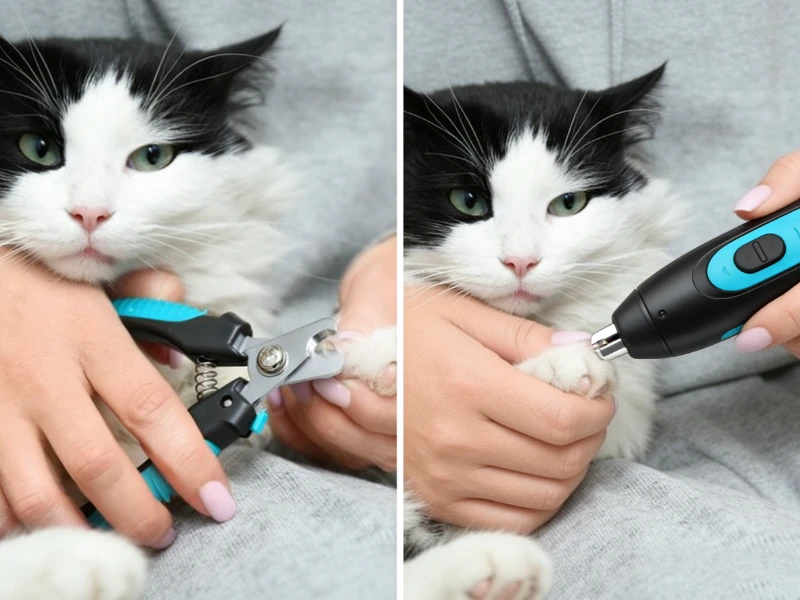
Manual Clippers: The Traditional, Silent Approach
Manual clippers, whether they are the scissor-type or guillotine-style, remain the go-to for many owners. For a skittish cat, their biggest advantage is silence.
- The Pro: Stealth and Speed. Since manual clippers don’t have a motor, they don’t produce the high-pitched hum that often triggers a cat’s “flight” instinct.
- The Con: The “Snap” Sensation. While silent, manual clippers exert pressure on the nail before cutting through. That sudden “crunch” can be startling.
- The Risk Factor: The biggest challenge is the “quick”—the sensitive vein inside the nail. If your cat flinches, it’s easy to cut too deep, which causes pain and bleeding.
Electric Nail Grinders: A Gentle, Modern Alternative
A cat nail grinder uses a rotating abrasive wheel to gradually file down the claw. For owners who are nervous about using traditional blades, a cat nail grinder offers a level of precision that manual tools simply cannot match.
- The Pro: Safety. Using a cat nail grinder allows you to take off small layers at a time, significantly reducing the risk of hitting the sensitive “quick.” You can learn more about pet nail anatomy to visualize why this is so important.
- The Con: Vibration. Some sensitive cats may initially dislike the hum of a cat nail grinder.
The Showdown: Which One Should You Choose?
To help you decide, let’s compare them side-by-side:
| Feature | Manual Clippers | Electric Nail Grinders |
| Noise Level | Silent | Low to Moderate Hum |
| Risk of Injury | Higher (One wrong move) | Lower (Gradual filing) |
| Finish | May leave sharp edges | Smooth, rounded edges |
| Best For… | Cats terrified of noise | Owners terrified of hitting the quick |
Tips for Grooming a Skittish Cat
Regardless of the tool you choose, the secret to success is desensitization:
- Introduce the Tool Slowly: Leave the tools near your cat’s food bowl for a few days.
- Sound Check: Turn the grinder on in another room, then gradually bring it closer while feeding treats.
- The “One Paw” Rule: Trimming just one nail per day is a massive victory.
FAQ: Common Questions About the Cat Nail Grinder
Q: Is a cat nail grinder louder than clippers? A: While a cat nail grinder does make a humming sound, high-quality models from Rufbud are designed to be whisper-quiet to minimize stress for skittish felines.
Q: How long does it take to groom with a cat nail grinder? A: It may take slightly longer than a quick clip, but the safety and smooth finish provided by a cat nail grinder make the extra minute well worth it.
Q: Can I use one cat nail grinder for multiple pets? A: Yes, as long as you clean the grinding head between uses to maintain hygiene.
Conclusion
There is no “one-size-fits-all” answer. If your cat is hyper-sensitive to sound, manual clippers are likely your best bet. However, if you fear hurting your pet with a manual cut, an electric nail grinder offers a safer, more controlled experience.
At Rufbud, we understand that your pet’s comfort is your top priority. That’s why we offer a range of high-quality grooming tools designed for safety. From precision cat clippers to ultra-quiet nail grinders, we have everything you need to keep your furry friend happy and healthy.